

Chlorine Dioxide in Aquaculture : Helping your farm perform better!

It goes without saying that a healthy pond environment and clean water positively impacts aquaculture health and delivers a rich yield to farmers. There are plenty of fish species and other aquatic life present in waterbodies and each of them react differently to different types of pathogens and impurities in water. Now when there […]
The growing importance of ETPs in Textile Manufacturing

Textile manufacturing in India has played an integral part in the growth that our country has witnessed over the past 2 decades. In fact it is an industry that offers much more than what meets the eyes. For starters, it contributes about 2% to the country’s GDP. And as an industry, it is the second largest employer […]
Centralized & Decentralized STPs – Finding the right balance

India’s water crisis is a constant. Although India has 16 per cent of the world’s population, the country possesses only four per cent of the world’s freshwater resources. India is water-stressed due to changing weather patterns and repeated droughts. As many as 256 of 700 districts in India have reported ‘critical’ or ‘over-exploited’ groundwater levels. […]
REDUCING LOAD ON EVAPORATORS – The Hows and Whys

Evaporation is essentially a separation process that takes advantage of the changing physical states of water, or other solvents, from liquid to vapor. It is unique from other separation processes, in that the water is removed from the contaminants rather than the pollutants being filtered from the water. Although widely used in the water treatment […]
DECENTRALIZED STPs – The Way Forward!
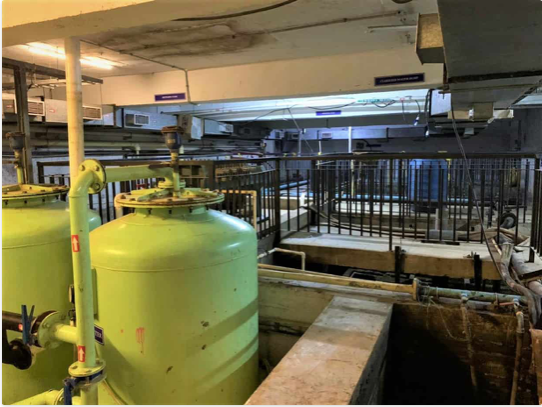
Water scarcity is one of the greatest challenges of the century. It affects not only human health and the environment, but also local economies, which depend on water for business, industry, and agriculture. Decentralized Sewage treatment plants are slowly becoming the knight in shining armour, tackling these water scarcity issues, especially in developing […]
BRINE MANAGEMENT – THE NEED OF THE HOUR

The world is experiencing serious shortages, unequal distributions, and contamination of available freshwater resources. Many factors like geography, increasing populations, industrialisation, and inadequate water management are the main contributors to this issue. Energy rich countries have set fossil fuel consumption and desalination of seawater as their main target method for continuous water supply. But this […]
Chlorine Dioxide – Drinking Water Disinfection

The goal of disinfection of public water supplies is the elimination of the pathogens that are responsible for waterborne diseases. The transmission of diseases such as typhoid and paratyphoid fevers, cholera, salmonellosis, and shigellosis can be controlled with treatments that substantially reduce the total number of viable microorganisms in the water. Chlorination is the […]
NANOFILTRATION MEMBRANES – Revolutionizing Product Concentration & Recovery

Technologies like Reverse Osmosis(RO), Ultrafiltration(UF) and Membrane Bioreactor(MBR) have been mainstays in the water and wastewater treatment industry for a long time. They have a defined set of applications and functions to fulfil as filtration membranes. Nanofiltration, however, hasn’t really observed a similar kind of adoption from the water and wastewater treatment industry. This […]
Chlorine Dioxide for Pulp Bleaching in Paper Mills

In the highly competitive global Pulp and Paper industry, the importance of the quality of output i.e. the quality of the paper manufactured cannot be understated. Customers have a plethora of options and they will not hesitate in finding another supplier if there is any variance in quality. This kind of cut-throat competition has […]
IMPORTANCE OF ODOUR CONTROL – AT MANUFACTURING FACILITIES

Industrial odours are produced by a variety of organisations and facilities, including wastewater treatment and chemical processing, to food manufacturing, the development of infrastructure, rubbish incineration and more. Industrial odours are also affected by environmental factors; for example, higher temperatures almost always lead to intensified odours, and the speed or direction of the wind […]